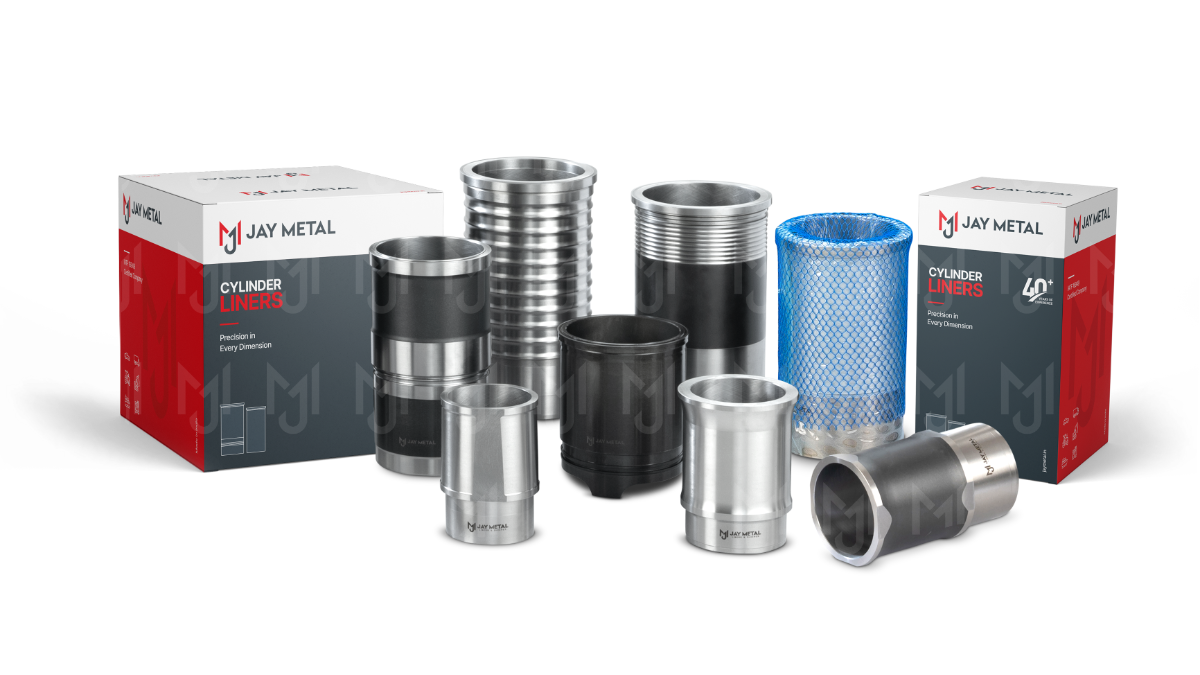
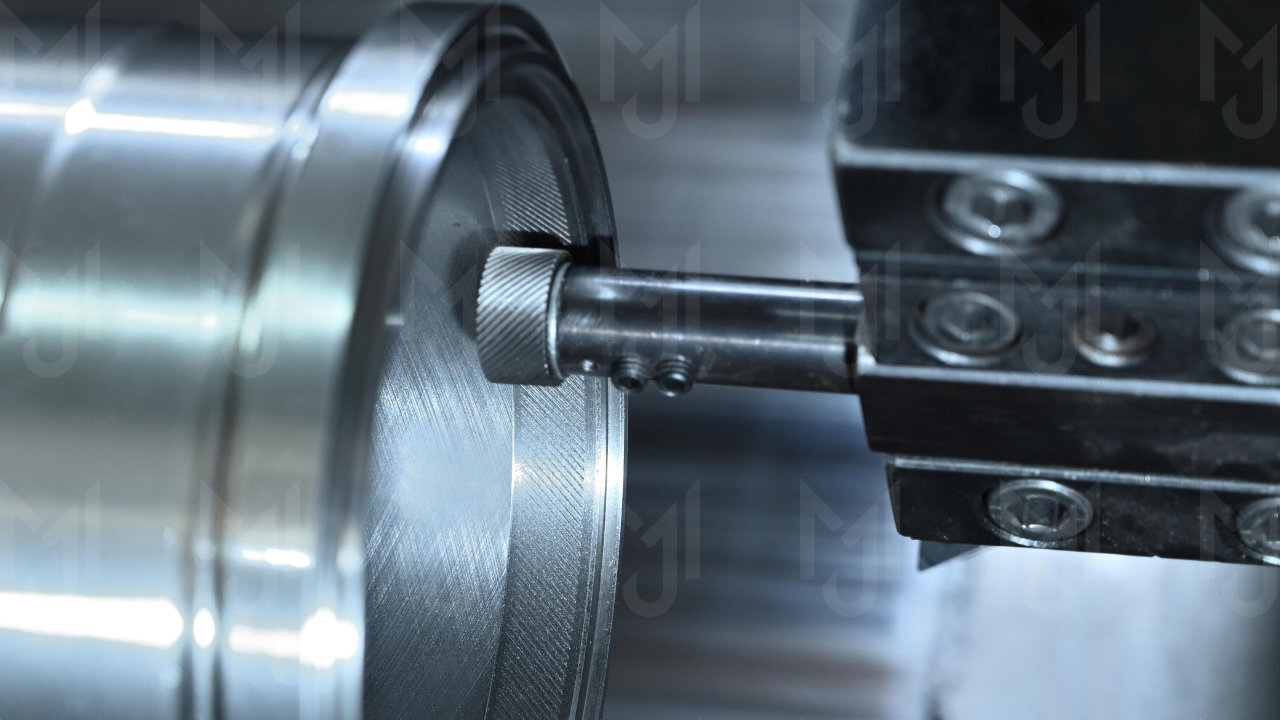
A cylinder liner may appear smooth to the eye, but its bore surface is deliberately engineered at a microscopic level. The pattern created during honing influences how lubricant is retained and distributed, how piston rings interact with the bore, and how the running surface behaves during initial bedding and long-term operation.
For this reason, honing is not simply a final machining step in manufacturing cylinder liners and sleeves. It is a functional surface-engineering process in which groove geometry, roughness characteristics, bore accuracy, and application requirements must work together.
Why the Honed Surface Matters
During engine operation, the piston rings move continuously against the cylinder liner under changing loads, temperatures, speeds, and lubrication conditions. The bore surface therefore has to perform two seemingly competing functions.
It must provide sufficient surface area to support the piston rings while also retaining enough lubricant within microscopic valleys to reduce direct contact and control wear.
A surface that is excessively rough can increase ring and liner wear during initial operation. On the other hand, a surface that is too smooth or lacks an effective valley structure may not retain lubricant adequately.
Research on cylinder bore honing has shown that surface finish directly influences lubricant consumption, piston-ring wear, and scuffing behaviour.
The objective is therefore not to create the roughest or deepest possible cross-hatch pattern. It is to produce a controlled surface topography appropriate to the engine, piston-ring system, lubricant, and intended operating conditions.
Understanding the Cross-Hatch Pattern
Honing produces intersecting grooves on the inner surface of a cylinder liner. Together, these grooves form the characteristic cross-hatch pattern visible on a correctly finished bore.
The pattern is created by the combined rotational and reciprocating movement of the honing tool. Changing these process parameters influences the resulting honing angle and surface geometry.
Honing angle is important because it affects the distribution and movement of lubricant across the cylinder wall. However, there is no single cross-hatch angle that is universally ideal for every engine.
Different engine applications can impose significantly different bore-surface requirements depending on load, duty cycle, lubrication, and operating conditions. The appropriate honing angle should therefore be established according to the specified engine design, ring pack, lubricant behaviour, and surface-finish requirements rather than applied as a generic rule.
What Plateau Honing Adds
Conventional honing can leave pronounced peaks as well as valleys on the bore surface. Plateau honing introduces an additional finishing stage that reduces the higher surface peaks while preserving the deeper valley structure.
This produces a surface with two important functional characteristics:
- relatively smooth plateau areas that provide the primary contact surface for the piston rings; and
- microscopic valleys capable of retaining and distributing lubricant.
The result is a bore surface designed to provide a more controlled running condition while maintaining the lubrication features created by the honing process.
Plateau honing can therefore help reduce the severity of initial surface interaction while supporting controlled friction and wear during engine operation.
Surface Finish Is More Than Ra
Average roughness, commonly expressed as Ra, provides useful information about a machined surface, but it does not fully describe the functional characteristics of a plateau-honed cylinder liner.
For this reason, parameters derived from the material-ratio curve are commonly used when evaluating honed running surfaces.
Studies on plateau-honed cast iron cylinder liners commonly evaluate functional parameters such as Rk, Rpk, Rvk, material ratio, and honing angle together rather than relying on average roughness alone.
Rpk – Reduced Peak Height
Rpk represents the protruding peaks above the core surface.
These peaks are particularly relevant during the initial running period because they are among the first surface features to interact with the piston rings. Controlling excessive peak height can help create a more stable initial running surface.
Rk – Core Roughness Depth
Rk represents the core portion of the surface profile that remains after the highest peaks have been reduced.
It provides information about the working surface that carries much of the contact load during operation.
Rvk – Reduced Valley Depth
Rvk describes the deeper valley portion of the surface profile.
These valleys contribute to lubricant retention within the honed surface. However, deeper valleys are not automatically better. Excessive oil-retaining capacity can also influence oil consumption and emissions, which is why valley characteristics need to be balanced against the overall surface specification.
Together with parameters such as material ratio and honing angle, these measurements provide a much more useful picture of cylinder-liner surface functionality than a single roughness value alone.
Controlling the Honing Process
Consistent bore finishing depends on more than selecting an abrasive and running a honing cycle.
Several variables influence the final surface, including:
- abrasive type and grit size;
- honing pressure;
- rotational speed;
- reciprocating speed;
- honing time;
- lubrication and coolant condition;
- tool condition; and
- the material and previous machining condition of the liner.
The process must also maintain dimensional characteristics such as bore size, roundness, straightness, and cylindricity while developing the required surface texture.
This relationship between geometry and surface finish is important. A liner can meet its nominal bore dimension while still failing to deliver the required functional surface if honing parameters are not properly controlled.
Oil Retention Is a Balance, Not a Maximum
The phrase “maximum oil retention” can be misleading when discussing cylinder liners.
A good honed surface needs sufficient valley volume to support lubrication, but the objective is not simply to retain as much oil as possible. Oil control within an engine depends on the interaction between the liner surface, piston rings, ring tension, lubricant, engine speed, temperature, and operating load.
Surface parameters therefore need to be optimised as a system. Greater valley capacity may improve lubrication or seizure resistance under certain conditions, but excessive oil capacity can also contribute to increased oil consumption.
The engineering objective is a controlled balance between:
- adequate lubricant retention;
- stable piston-ring contact;
- controlled friction;
- manageable running-in behaviour;
- wear resistance; and
- oil-consumption requirements.
Why Consistency Matters in Production
For a cylinder liner manufacturer, achieving the desired surface on one component is not enough. The same functional characteristics must be reproduced consistently across production batches.
That requires disciplined control of machining conditions, honing parameters, tool wear, surface measurement, and inspection.
Surface roughness measurements, geometry checks, and defined process controls help ensure that finished liners remain within specified requirements rather than relying only on visual appearance.
For aftermarket and private-label customers in particular, this consistency matters because the same cylinder liner reference may be supplied repeatedly over extended periods and across different production batches.
From Bore Geometry to Engine Performance
Cross-hatch honing sits at the final interface between manufacturing accuracy and real engine operation.
Casting quality and metallurgy establish the material foundation. Precision machining establishes bore geometry. Honing then develops the working surface that will interact directly with the piston rings and lubricant throughout the life of the engine.
When these elements are properly controlled together, the cylinder liner is better positioned to support reliable ring interaction, lubrication behaviour, wear performance, and engine service life.
How Jay Metal Controls Cylinder Liner Bore Finishing
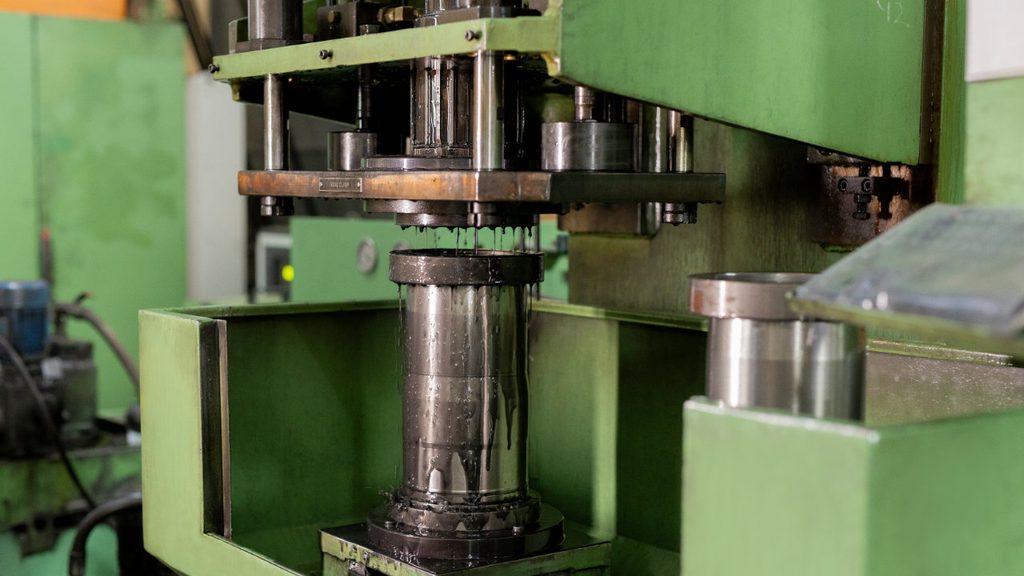
At Jay Metal, bore finishing is treated as a functional part of cylinder liner performance rather than simply a final machining operation. The honing process is aligned with dimensional and surface requirements so that bore geometry, cross-hatch characteristics, and surface condition are controlled together.
Jay Metal manufactures cylinder liners and sleeves through its integrated cylinder liner manufacturing facilities, covering casting, machining, grinding, honing, finishing, and inspection. This coordinated approach helps maintain consistency between the underlying material, finished bore geometry, and the surface characteristics that influence lubrication, piston-ring interaction, and wear behaviour.
Plateau honing is used where required to develop a controlled running surface while preserving the valley structure needed for lubricant retention. Surface finish and dimensional characteristics are then verified against defined requirements before the liner is released.
By managing these stages within a connected manufacturing process, Jay Metal is better positioned to deliver repeatable bore quality across different cylinder liner specifications, production volumes, and application requirements.
Conclusion
Cross-hatch honing plays a critical role in how a cylinder liner interacts with piston rings and lubricant throughout engine operation.
The objective is not to maximise any single surface characteristic. Effective bore finishing depends on achieving the right balance between plateau area, valley structure, honing angle, dimensional accuracy, lubrication behaviour, friction, wear, and oil control.
For manufacturers and sourcing teams, understanding these relationships is important because bore finish is not only a visual characteristic. It is a functional feature that directly influences how the liner performs in service.
A well-controlled honing process therefore forms an essential part of producing cylinder liners that deliver reliable fit, stable operation, and dependable service life.
If you are sourcing cylinder liners or sleeves for aftermarket, private-label, or application-specific requirements, contact Jay Metal to discuss your product references, specifications, bore-finish requirements, and supply needs.