
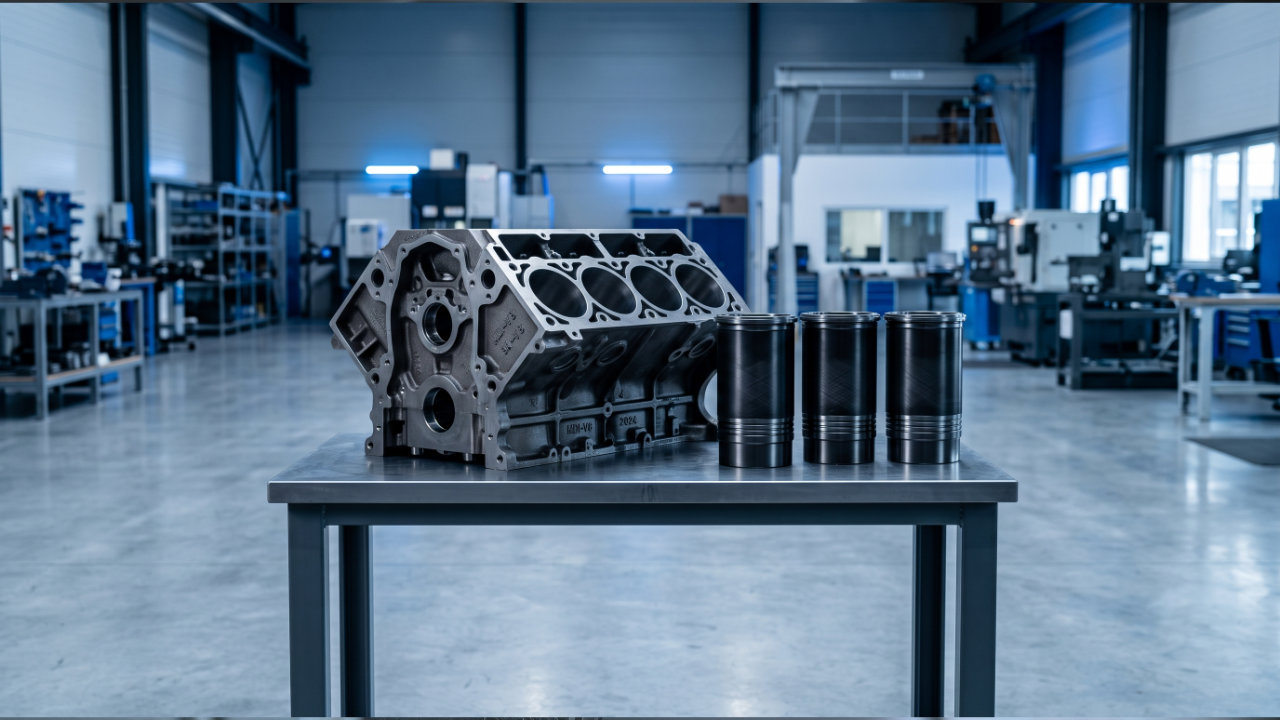
The Crucial Role of Cylinder Liners in Engine Longevity
In high-performance and heavy-duty internal combustion engines, the cylinder bore faces some of the most aggressive operating conditions imaginable. Exposed to extreme combustion temperatures, intense lateral piston thrust, and continuous mechanical friction, an unprotected engine block would rapidly wear out.
Cylinder liners act as vital protective barriers, shielding engine blocks against thermal expansion and mechanical stress. Understanding how quality liners preserve structural integrity and optimize heat transfer is key to extending overhaul intervals and maximizing engine service life.
Core Functions of a Cylinder Liner
A precision-engineered cylinder liner performs three critical functions within the engine block:
- Forming the Combustion Chamber: Acts as the inner wall of the cylinder, providing a smooth, high-strength surface for piston ring travel under peak combustion pressures.
- Efficient Heat Dissipation: Absorbs intense heat generated during combustion and transfers it efficiently to the engine coolant jacket or cooling fins, preventing local hot spots.
- Sealing the Working Gas: Maintains gas-tight compression above the piston while preventing blow-by gases and lubricating oil from contaminating adjacent chambers.
How Cylinder Liners Prevent Premature Engine Wear
Engine longevity depends heavily on maintaining precise dimensional tolerances within the cylinder bore over thousands of operating hours. Quality liners protect the engine in several key ways:
- Superior Wear Resistance: Manufactured via centrifugal casting, grey iron liners possess high graphite content that provides natural self-lubrication, reducing scuffing between the liner wall and piston rings.
- Corrosion & Cavitation Protection: Resists coolant-side cavitation and chemical erosion caused by combustion byproducts, preventing coolant leakage into the crankcase.
- Bore Distortion Control: Uniform wall thickness and precise flange geometry ensure even stress distribution, keeping the cylinder bore perfectly round even under heavy thermal loads.
Dry Liners vs. Wet Liners: Impact on Service Life
Depending on engine design and application requirements, cylinder liners are categorized into two primary types:
- Dry Cylinder Liners: Installed into a fully supported cylinder block bore with thin walls. Dry liners do not contact engine coolant directly. They provide excellent structural rigidity and are common in light-to-medium automotive and industrial engines.
- Wet Cylinder Liners: Directly contact the engine coolant on their outer surface. Featuring thicker walls and specialized sealing O-rings, wet liners offer superior heat dissipation and allow for straightforward field replacement without replacing the entire engine block.
Key Maintenance Practices for Extending Liner Life
To achieve maximum engine lifespan and prevent premature overhaul, follow these essential maintenance protocols:
- Maintain Coolant Chemistry: Use properly formulated anti-cavitation coolants to prevent pitting along the outer walls of wet liners.
- Ensure Proper Honing: Maintain precise cross-hatch honing patterns during engine rebuilds to retain lubricating oil film along the piston ring belt.
- Monitor Fuel & Injection Timing: Prevent unburned fuel dilution, which washes away the protective oil film on cylinder walls and leads to rapid abrasive wear.
Conclusion
Cylinder liners are indispensable components in modern engine construction. By absorbing mechanical friction, resisting thermal distortion, and enabling cost-effective overhauls, high-grade liners ensure that heavy-duty commercial engines deliver reliable performance over long service lives.
Partnering with an IATF 16949 certified manufacturer ensures your engine builds feature the metallurgical density, dimensional precision, and wear resistance needed for demanding environments.