
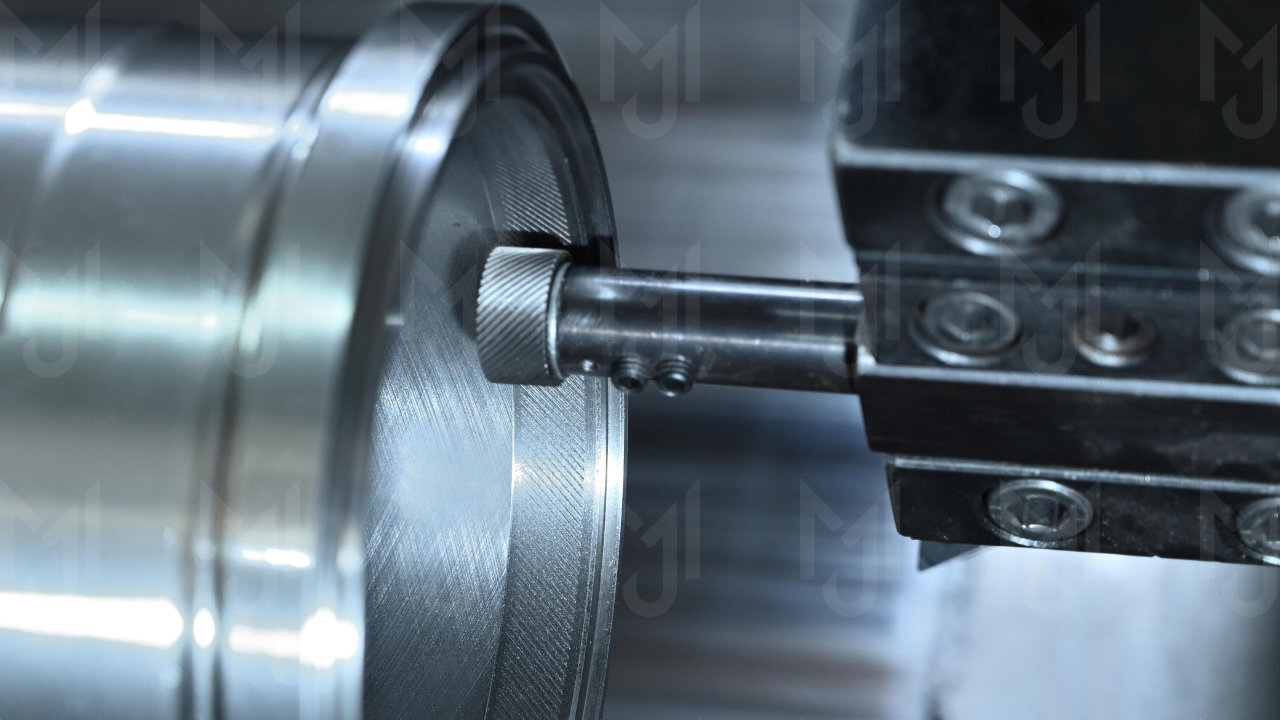
Optimizing Cross-Hatch Honing for Maximum Oil Retention
In high-performance internal combustion engines, the microscopic texture of the cylinder liner wall plays a decisive role in engine efficiency and lifespan. Without a controlled surface topography, lubricating oil cannot adhere to the bore, leading to direct metal-to-metal contact between the piston rings and the cylinder wall.
Cross-hatch honing—specifically multi-stage CNC plateau honing—creates microscopic valley networks that retain essential oil film while maintaining smooth peak surfaces. Optimizing cross-hatch angles and surface roughness parameters is critical to minimizing friction, controlling oil consumption, and extending service intervals in commercial engines.
Understanding the Cross-Hatch Pattern and Honing Angles
Cross-hatch honing produces intersecting diagonal microscopic grooves across the inner wall of the cylinder liner. The angle at which these lines intersect is called the cross-hatch angle.
- Standard Cross-Hatch Angle (30° to 45°): Ideal for standard commercial and passenger vehicle engines. Provides an optimal balance between hydrodynamic oil retention and piston ring rotation.
- Steeper Cross-Hatch Angle (50° to 60°): Frequently specified for high-rpm or heavy-duty diesel engines. Accelerates oil distribution along the bore length to withstand intense lateral piston forces.
- Shallow Angles (< 30°): Should be avoided, as overly horizontal grooves allow oil to migrate away too quickly, leading to ring scuffing and elevated bore wear.
The Role of Plateau Honing in Modern Engine Manufacturing
Traditional single-stage honing leaves sharp peaks on the liner surface that wear down rapidly during engine break-in, contaminating the oil with microscopic metal debris. Modern precision manufacturing utilizes plateau honing—a multi-stage process involving coarse diamond stones followed by fine silicone carbide or flex-brush finishing.
- Valley Creation: Coarse honing stones create deep grooves (valleys) that serve as dedicated oil reservoirs.
- Peak Removal: Fine finishing stones shear off the sharp ridges, creating flat “plateaus” that support the piston ring load.
- Instant Seating: Because the sharp peaks are removed in the factory, piston rings achieve instant, uniform seating without requiring prolonged, damaging break-in periods.
Key Surface Finish Metrics (Rk, Rpk, Rvk)
To ensure consistent oil retention across production batches, quality assurance teams rely on specialized surface profile parameters rather than simple average roughness (Ra):
- Rk (Core Roughness Depth): Measures the depth of the working surface that supports the load after initial ring bedding.
- Rpk (Reduced Peak Height): Measures the height of the surface peaks that will wear away during initial operation; lower values indicate a superior plateau finish.
- Rvk (Reduced Valley Depth): Measures the depth of the oil-retaining grooves; higher values ensure adequate lubricant storage under extreme load conditions.
Benefits of Optimized Cross-Hatch Honing
- Reduced Oil Consumption: Prevents oil from migrating past the compression rings into the combustion chamber, minimizing exhaust smoke and carbon deposits.
- Lower Friction & Heat: Maintains a continuous hydrodynamic oil film, reducing friction losses and operating temperatures.
- Extended Component Life: Protects both the cylinder liner wall and piston ring coatings against premature scuffing and abrasive wear.
Conclusion
Precision cross-hatch honing is a crucial bridge between metallurgy and lubrication science. By precisely controlling cross-hatch angles and plateau surface metrics, engine builders and manufacturers ensure that cylinder liners deliver low friction, minimal oil consumption, and extended operational lifespans under severe operating conditions.
Partnering with an IATF 16949 certified manufacturer equipped with advanced CNC plateau honing machinery guarantees consistent surface topography on every cylinder liner.